Columbia Space Initiative CubeSat
Structures Subteam | Regulatory Compliance & Thermal Analysis
Technologies & Tools
CAD & Analysis
Fusion 360, SOLIDWORKS, Ansys Thermal Desktop
Manufacturing
3D Printing, Waterjet Cutting (±0.1mm)
Regulatory
NASA ODAR, FCC/FAA Compliance Documentation
Problem: Launching Spaceflight Hardware with Regulatory Approval
The Columbia Space Initiative is launching a 1U video-transmitting CubeSat satellite in April 2026, with a larger 6U satellite planned for 2027 or later designed to conduct IR spectrometry on circumgalactic gasses. As a member of the structures subteam, I primarily write regulatory and compliance documentation, design components to be used on the satellite, and conduct thermal analyses to predict the amount of cooling needed by the satellite.
I was the lead in drafting an Orbital Debris Assessment Report under NASA standards, critical for securing a launch license for our 1U satellite in 2026. Additionally, I often contribute design input and conduct thermal analysis using Ansys Thermal Desktop.
My Technical Contributions
- Lead author of NASA Orbital Debris Assessment Report (ODAR) securing launch license for April 2026 1U mission
- Calculated ~4 month deorbit timeline and 0 casualty risk (Ec), meeting NASA debris mitigation requirements
- Designed deployable door mechanism using resin to prevent cold-welding in vacuum environment
- Created alternate sliding rail prototype (±0.1mm waterjet tolerance) that informed final constant-force spring design
- Suggested anodized constant-force spring solution to eliminate jamming failure mode
- Conducted thermal analysis using Ansys Thermal Desktop for 1U/6U satellite thermal validation
- Prepared regulatory and compliance documentation for FCC/FAA/NASA requirements
- Prototyped structural components using 3D printing and waterjet cutting for rapid iteration
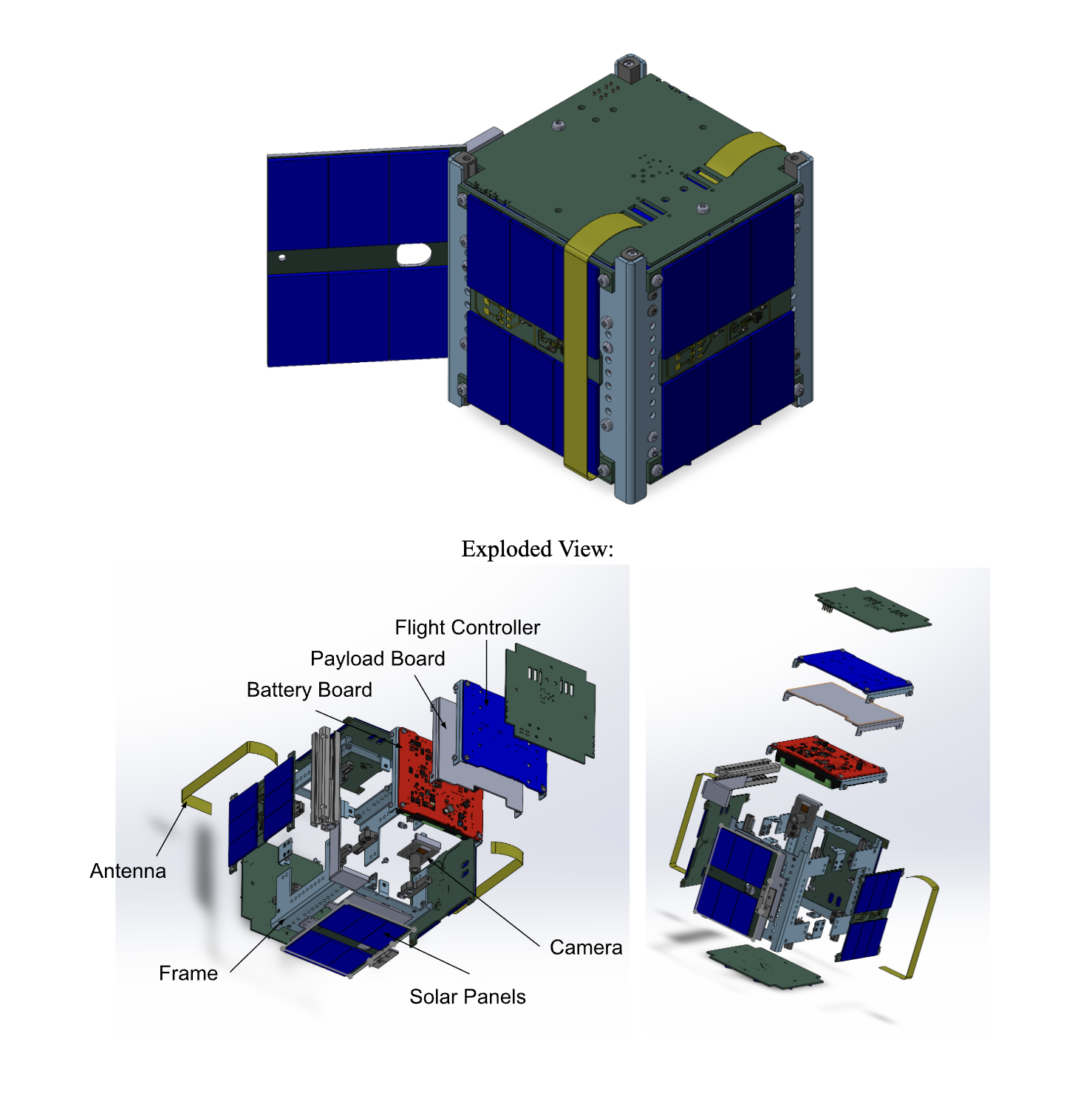
Figure 1: Labelled diagram of the 1U CSI CubeSat used in Orbital Debris Assessment Report showing structural layout and deployable mechanism integration
Process: NASA Orbital Debris Assessment Report (ODAR)
Regulatory Compliance for Launch License
Satellite launches require extensive documentation and approval from multiple agencies. I contribute to compliance documentation ensuring our design meets orbital debris mitigation regulation and contribute to other regulatory-based decisions.
As lead author of the ODAR, I calculated and documented the satellite's deorbit timeline (~4 months post-mission), casualty risk assessment (Ec = 0, meeting NASA's <1×10⁻⁴ requirement), and orbital debris mitigation compliance. The report was accepted by NASA, clearing a critical regulatory hurdle for our April 2026 launch.
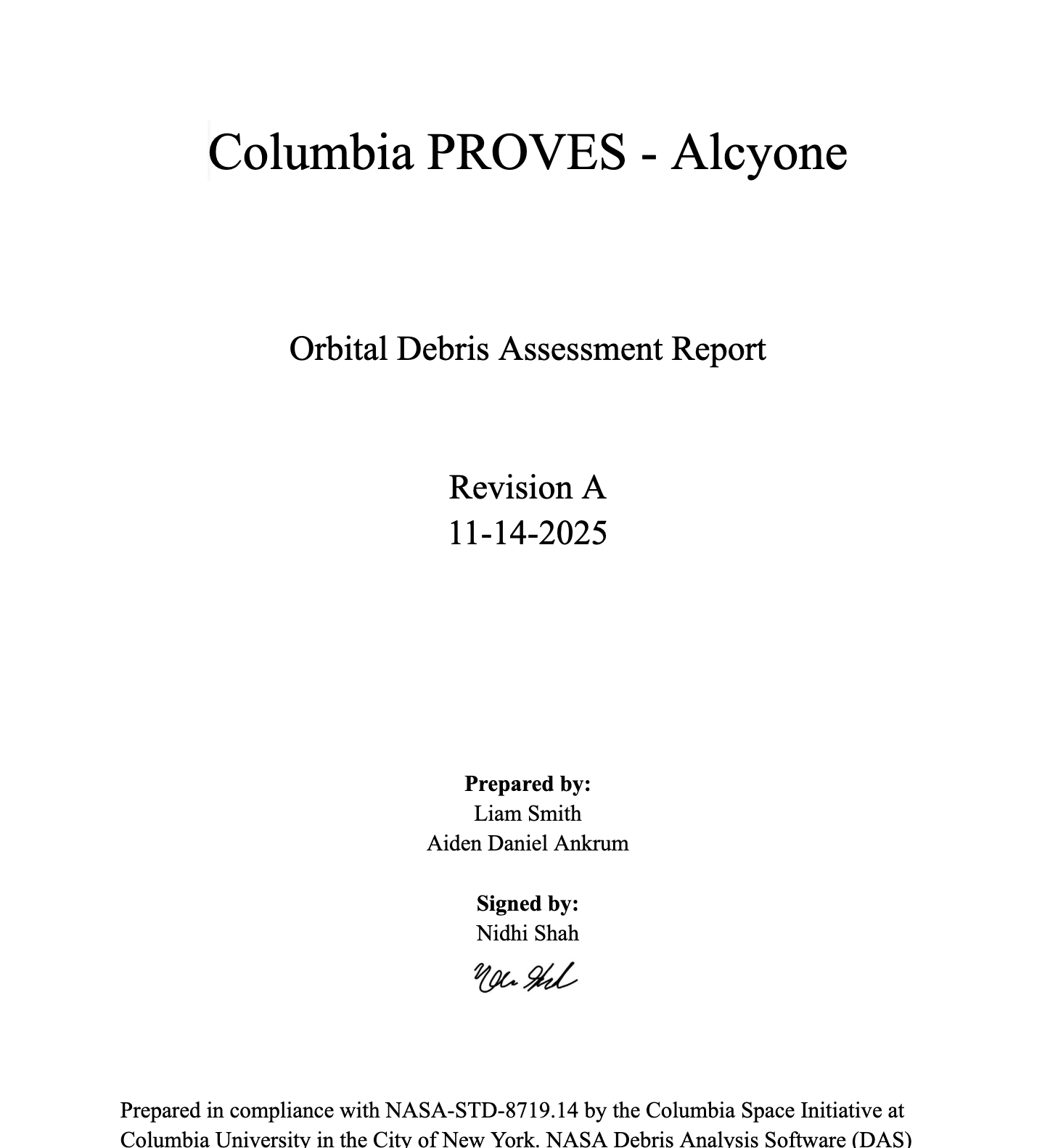
Figure 2: Cover of Orbital Debris Assessment Report prepared principally by me and two others, submitted to NASA for 1U launch approval
Process: Deployable Door Mechanism Design
Problem: Preventing Failure Modes in Space Deployment
Any mechanism designed for our CubeSat must pass rigorous vibration and thermal tests prior to launch. One of the biggest difficulties in getting our 1U Cube Satellite to launch was determining how to best create a mechanism to open a door and extend a figure into a photographic frame that would resist vibration and had an effectively 0% of failure in deployment.
The primary failure modes we needed to prevent were jamming during deployment and explosive failure during vibration testing. The mechanism must survive launch vibrations while reliably deploying once in orbit.
Material Selection: Resin vs. Metals
Our designs were extremely material limited due to cold-welding, outgassing requirements, and durability specifications. Despite this, we were able to create a resin-based solution that satisfied all of these requirements and performs under operation parameters. I suggested the use of an anodized constant-force spring and created designs with these constraints in mind.
Why Resin? Resin was selected as it did not experience cold welding (critical for mechanisms in vacuum) and met NASA's outgassing requirements for spacecraft materials. Metallic components risk cold-welding when sliding surfaces contact in vacuum, which would cause the deployment mechanism to jam permanently.
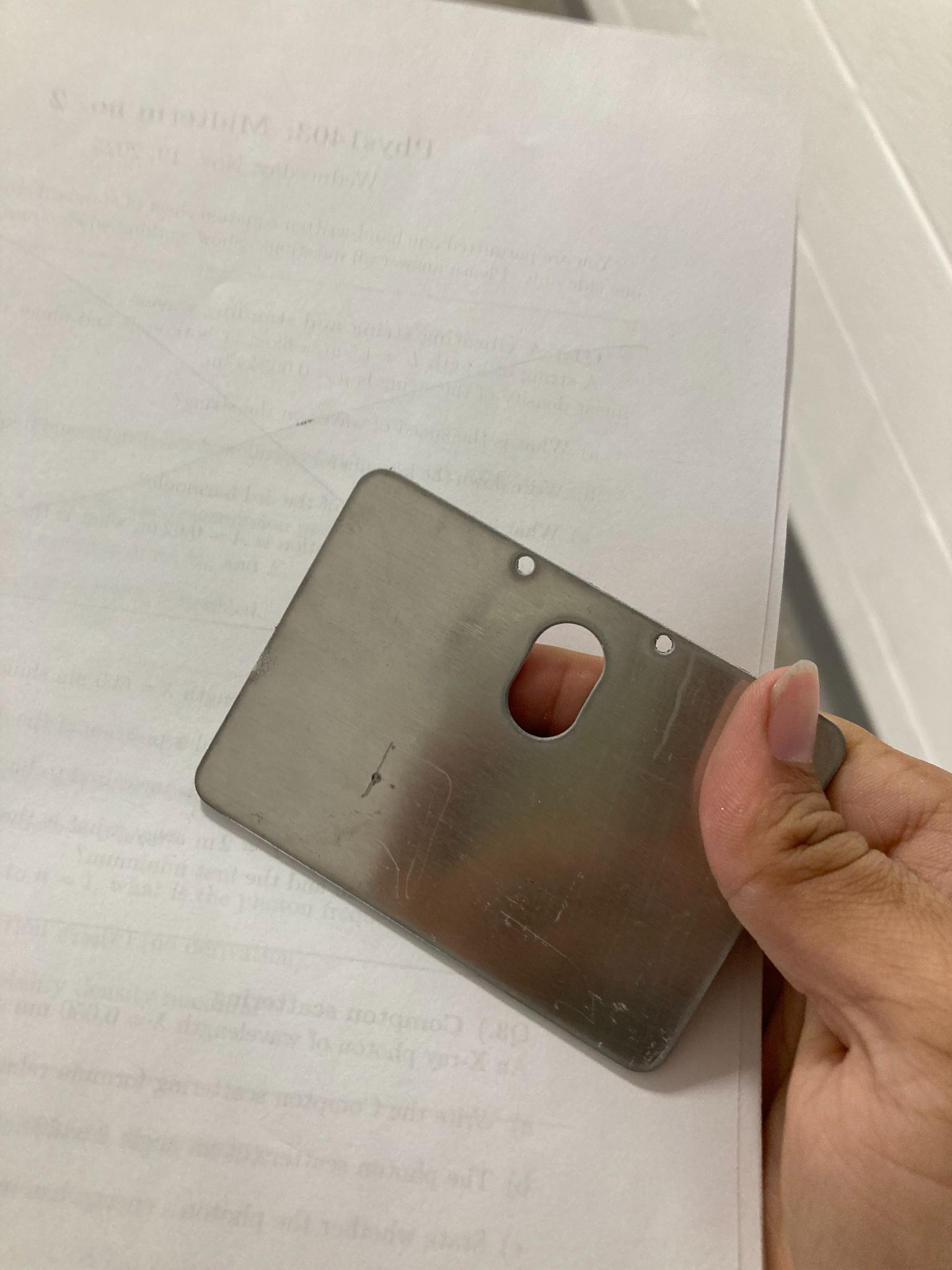
Figure 3: Waterjetted prototype deployable door (±0.1mm tolerance), used on final prototype. Resin material prevents cold-welding in vacuum environment.
Design Iteration: Slider Mechanism Evolution
Initial Design (My Prototype): Created alternate sliding rail systems to move small model into frame once in orbit. My initial prototype used a normal spring mechanism but experienced jamming issues near the start of its extension range.
Problem Identified: The normal spring's variable force curve caused binding during initial deployment when friction was highest. This created an unacceptable failure risk for a space mechanism with zero maintenance opportunities.
Final Solution: Our team lead resolved the jamming issue by implementing a constant-force spring design that had sufficient tolerances to meet deployment requirements. The constant force profile ensures consistent deployment force throughout the entire travel range, eliminating the binding condition.
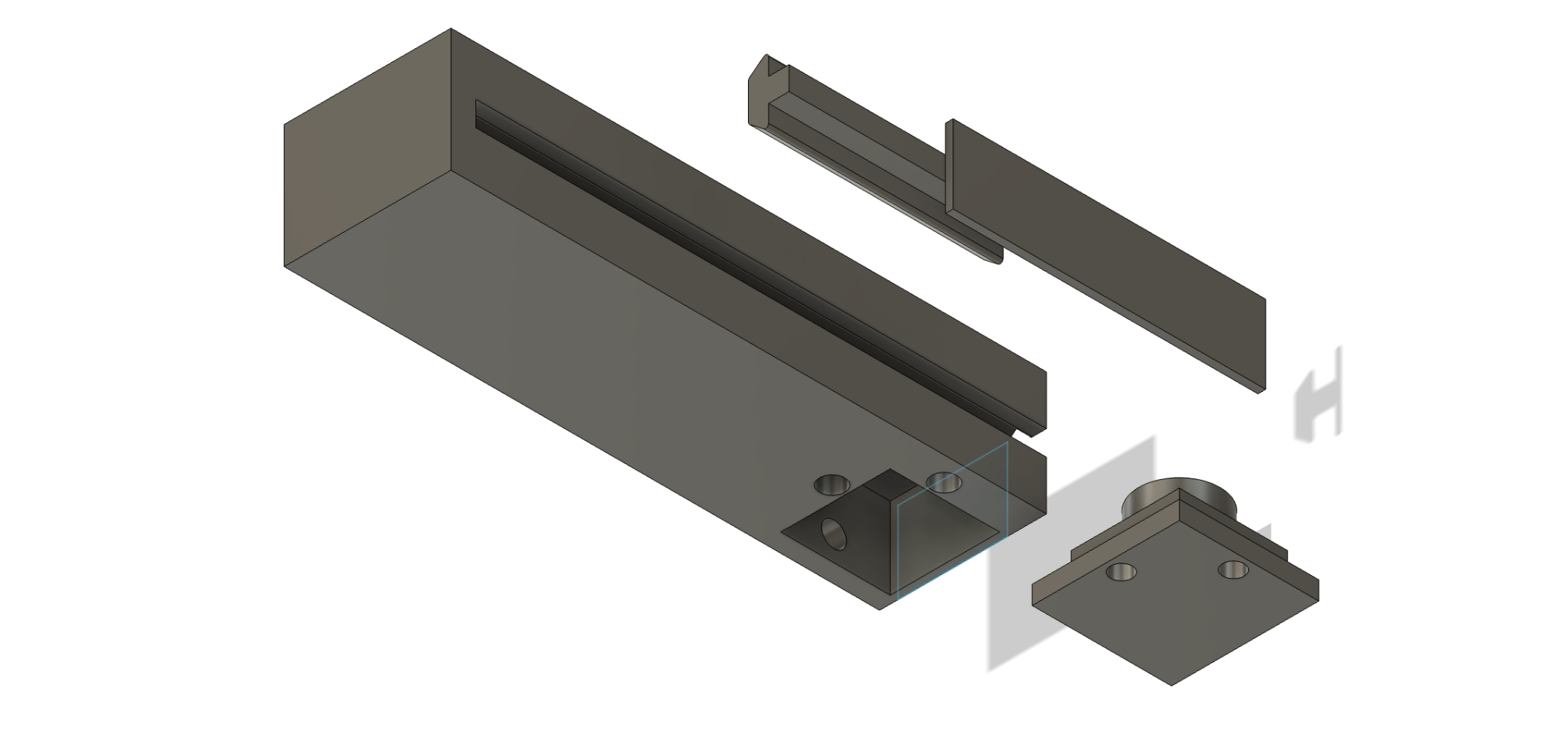
Figure 4: Alternate slider design created by me (not used in final prototype). Normal spring design led to jamming issues, informing final constant-force spring solution.
Design for Manufacturing (DFM)
Manufacturing Methods:
- Waterjet Cutting (±0.1mm tolerance): Deployable door component fabricated from resin sheet stock to prevent cold-welding while meeting NASA outgassing requirements
- 3D Printing: Rapid prototyping of structural components and slider mechanisms for design iteration
- Constant-Force Spring (COTS): Anodized stainless steel spring selected for consistent deployment force profile and corrosion resistance in space environment
Space-Grade Material Requirements:
- No cold-welding in vacuum (resin sliding surfaces)
- Low outgassing per NASA standards (ASTM E595: TML <1%, CVCM <0.1%)
- Vibration resistance for launch loads
- Thermal stability across operational temperature range
Process: Thermal Analysis with Ansys Thermal Desktop
Using Ansys Thermal Desktop, I model the 6U satellite's thermal behavior in the space environment. This includes:
- Solar radiation heating from direct sunlight
- Earth's infrared radiation (albedo effect)
- Radiative cooling to deep space
- Internal heat generation from electronics
The analysis ensures all components remain within operational temperature ranges, with particular attention to the 6U's intended IR spectrometer -37°C operating requirement for optimal performance.
Media/IMG_9201.HEIC
Caption: "Figure 5: Ansys Thermal Desktop model of basic 1U simulation results"
Media/IMG_9200.HEIC
Caption: "Figure 6: Ansys Thermal Desktop screenshot showing projected orbit as a model prior to simulation."
Collaboration & Integration
All work completed was within the scope of CalPoly's Pleiades University Cube Satellite mission, meaning that every design decision needed to fit into the hardware specifications provided by CalPoly. Our collaboration yielded a unique 1U cube satellite with deployable mechanisms, unlike other Pleiades satellites.
Solution: Mission Significance
These CubeSat missions represent real spaceflight hardware that will be launched into orbit. The 1U mission in April 2026 serves as a technology demonstrator for the more complex 6U mission. Success of these missions will demonstrate Columbia's capability in satellite design and operations, opening doors for future, more ambitious space projects.
The 6U satellite's IR spectrometer payload will contribute valuable scientific data once in orbit, making this not just an engineering exercise but a mission with real scientific impact by validating earth-based telescope.
Skills Developed
Technical Skills
- Spacecraft thermal analysis and thermal control system design
- Deployable mechanism design for space applications
- Multi-software CAD workflow (Fusion 360 and SOLIDWORKS)
- Ansys Thermal Desktop for orbital thermal modeling
Systems Engineering
- Regulatory compliance documentation for spaceflight hardware
- NASA ODAR preparation and orbital debris mitigation analysis
- System-level thinking for satellite architecture
- Whole-cycle product development from concept to launch
Links & Resources
Organization: Columbia Space Initiative
Partner Mission: CalPoly Pomona Space Systems - Pleiades